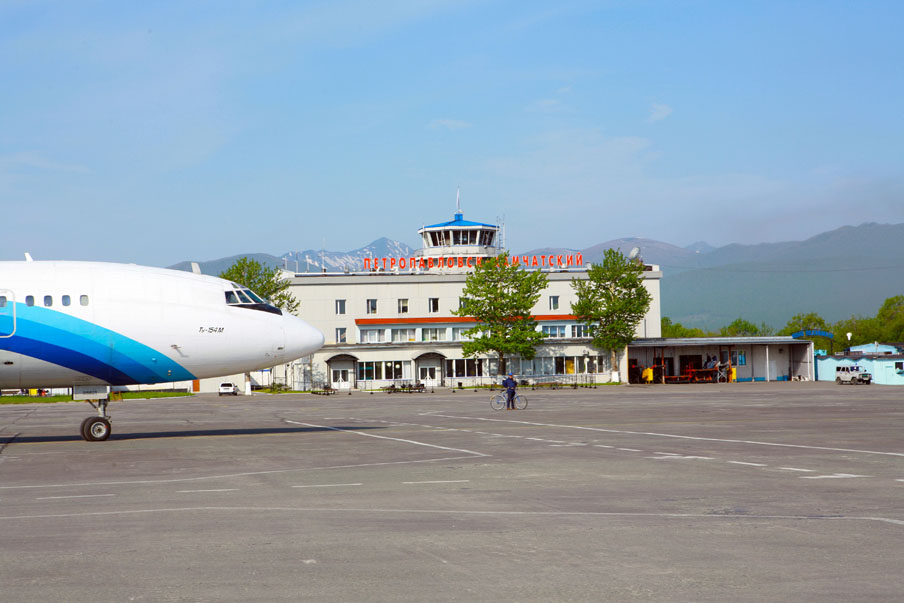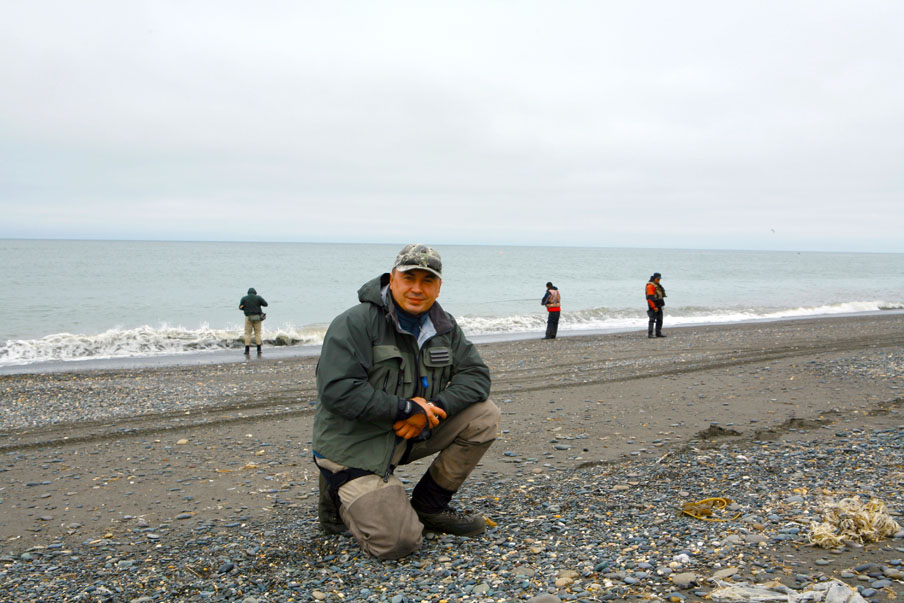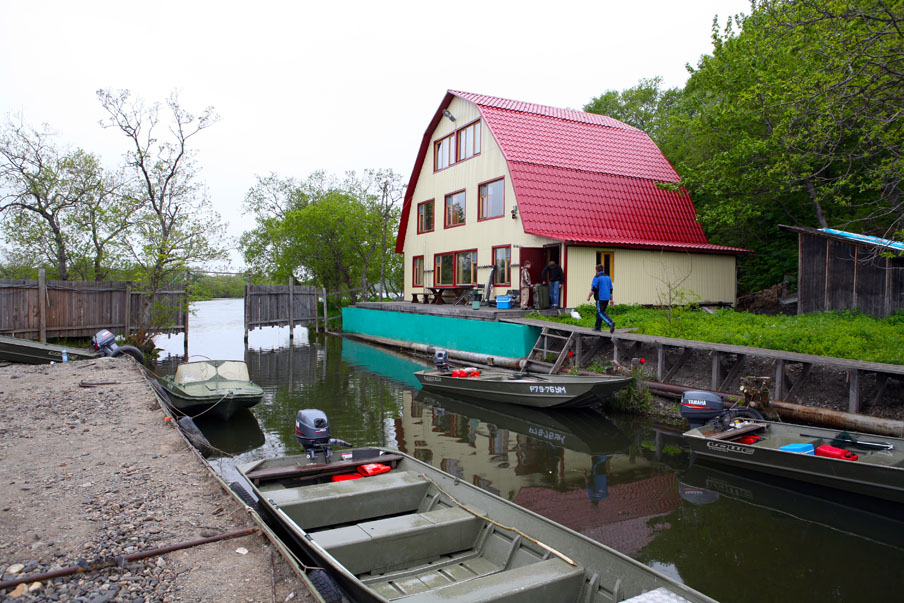

For a traveling angler who dreams of fly fishing for chinook salmon, the best option would be to visit the fast mountain rivers of the Kamchatka region. Geographically, Kamchatka is a peninsula in the northeastern part of Eurasia, located in Russia. The peninsula is bordered to the west by the Bering Sea and the Pacific Ocean. Kamchatka stretches about 1,200 km from north to south and is connected to the mainland by a narrow isthmus, up to 93 km wide, with its widest point (up to 440 km) at the latitude of Cape Kronotsky. The total area of the peninsula is approximately 270,000 km².
The eastern coast of Kamchatka is deeply indented, forming large bays such as Avacha, Kronotsky, Kamchatka, Karaga, and Ossora, among others. Rocky peninsulas, such as Shipunsky, Kronotsky, Kamchatka, and Ozerny, jut far into the sea. The central part of the peninsula is crossed by two parallel mountain ranges—the Central Range and the Eastern Range, with the Central Kamchatka Lowland lying between them, through which the Kamchatka River flows.
Kamchatka is one of the largest volcanic regions in the world, but it is also the largest area of mountain glaciation in Russia. It is home to about 150 clusters of hot springs and over 100,000 lakes. In the clear rivers, salmon fish spawn, brown Kamchatka bears roam the dense forests, and seals, walruses, and sea otters—animals listed in the Red Book—make their homes on the coastal shores.
This region has always fascinated tourists with its “sleeping” volcanoes, black volcanic sand beaches, unique geyser valleys, thermal springs, skiing excursions, the incredible beauty and untouched nature, and, of course, the rivers teeming with all types of Pacific salmon and other rare fish species.
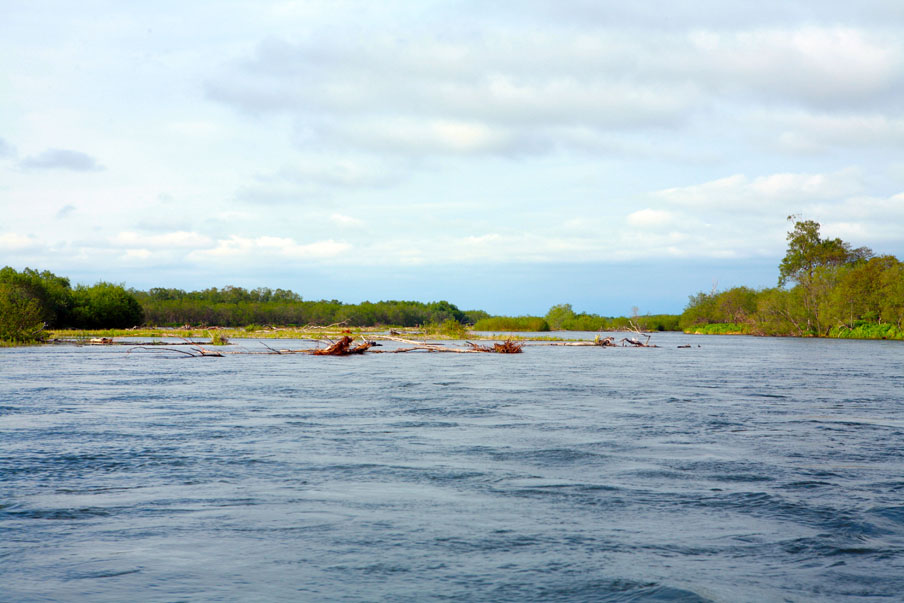
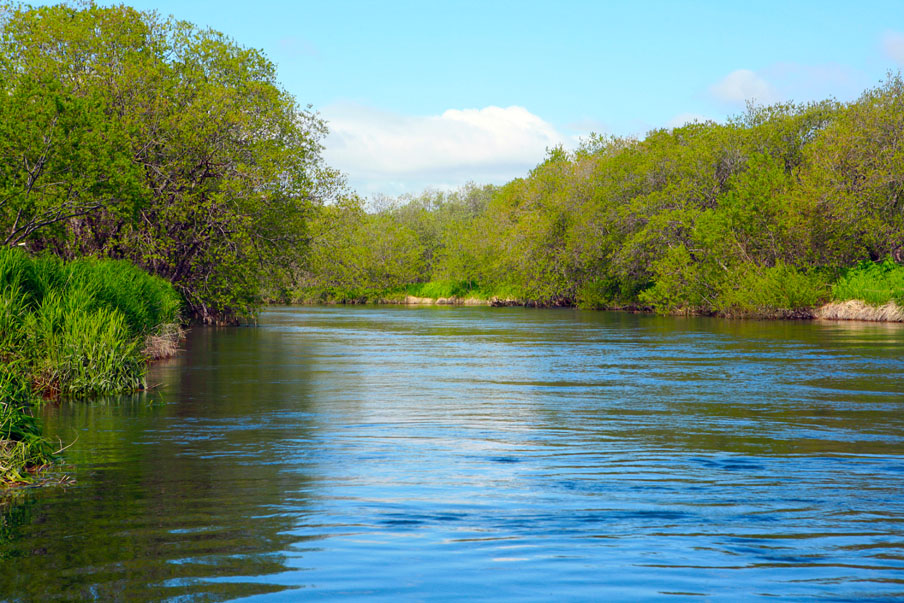
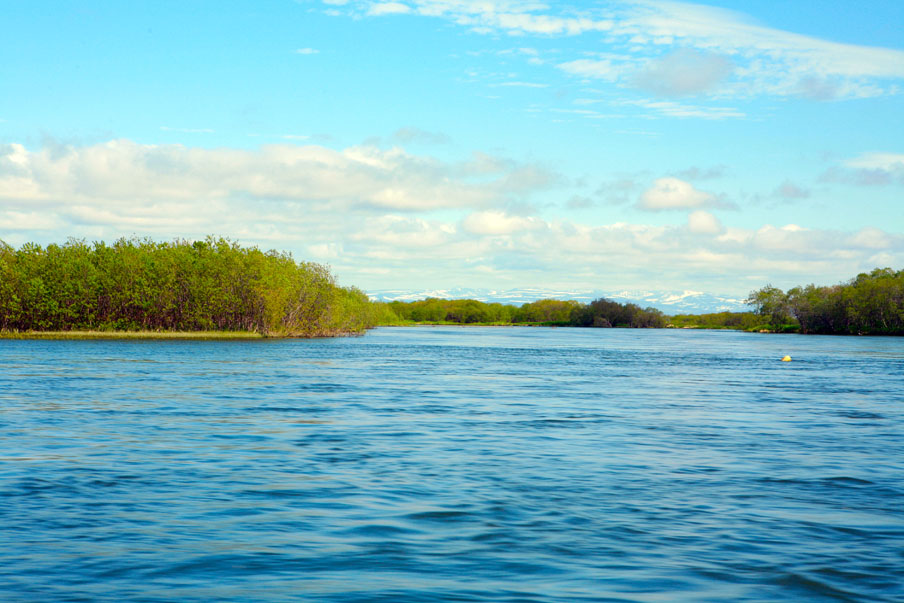
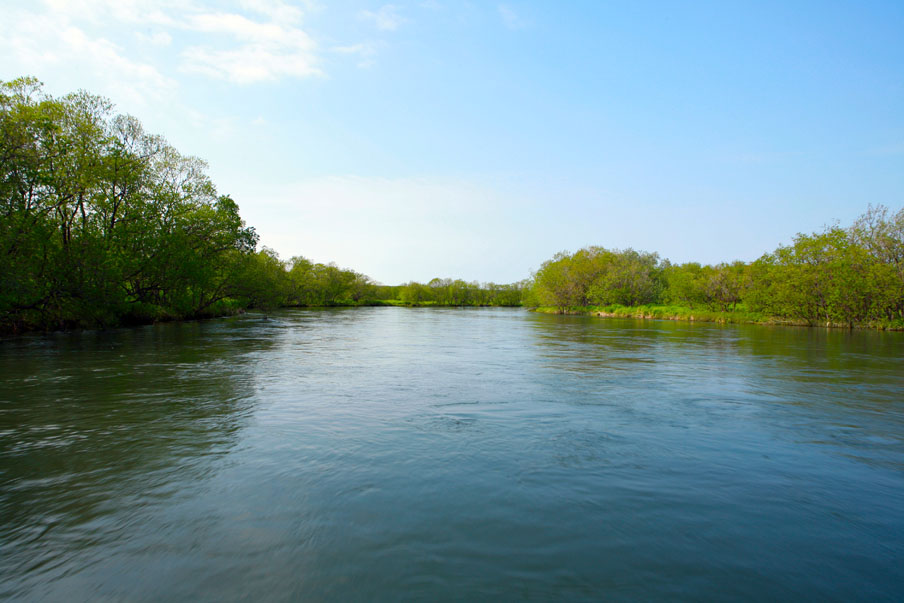
Among anglers, the Bolshaya River (the upper section of the Plotnikova River—Shvydka) is particularly popular. This river is located in the northwestern region of the Kamchatka Peninsula. The river is 275 km long, with a drainage basin area of 10,800 km². It originates in the Ganalsky Range, flows through the Yelizovsky and Ust-Bolsheretsky districts of Kamchatka Krai along the northern spurs of the Central Range, and then empties into the Sea of Okhotsk.
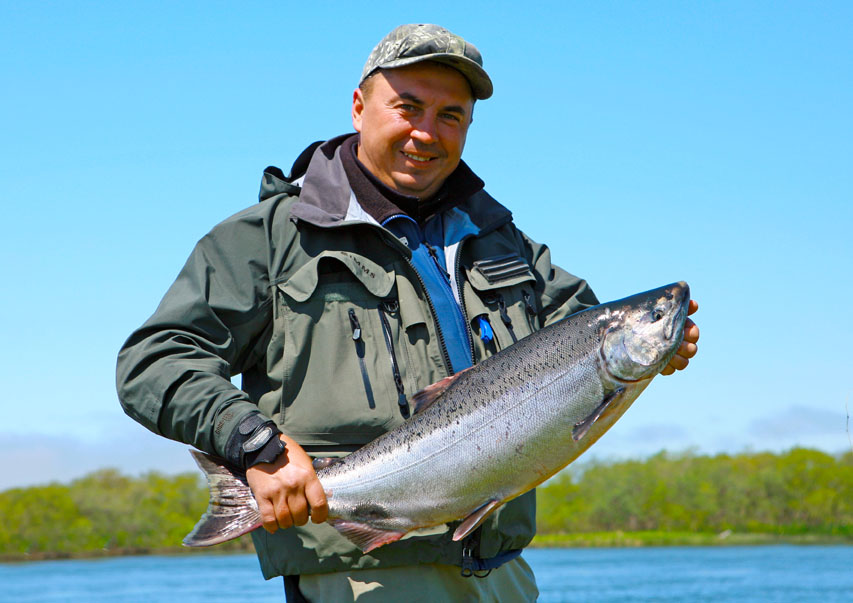
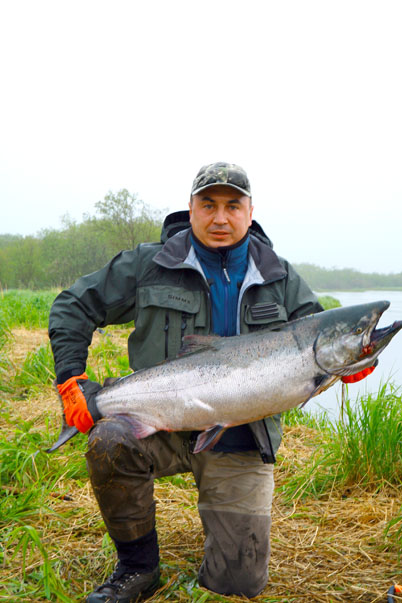
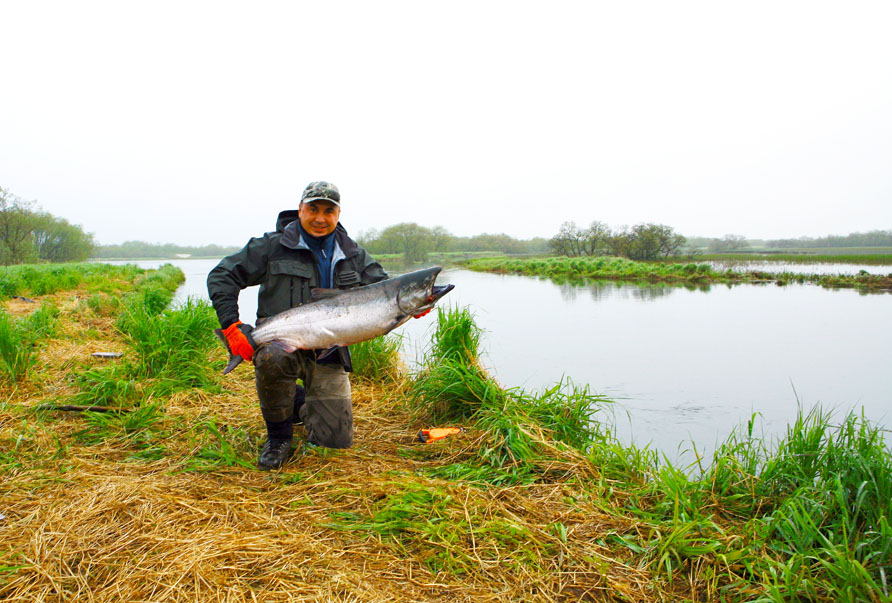
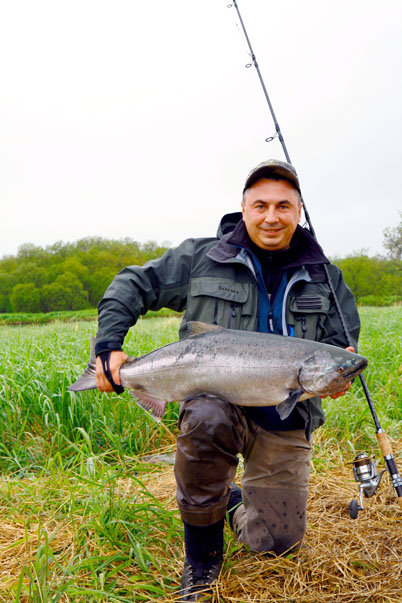
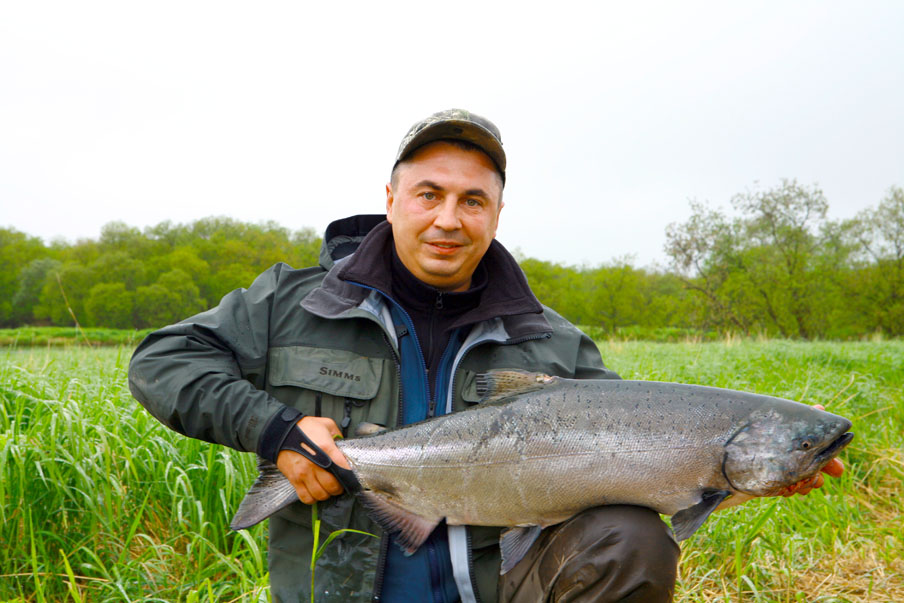
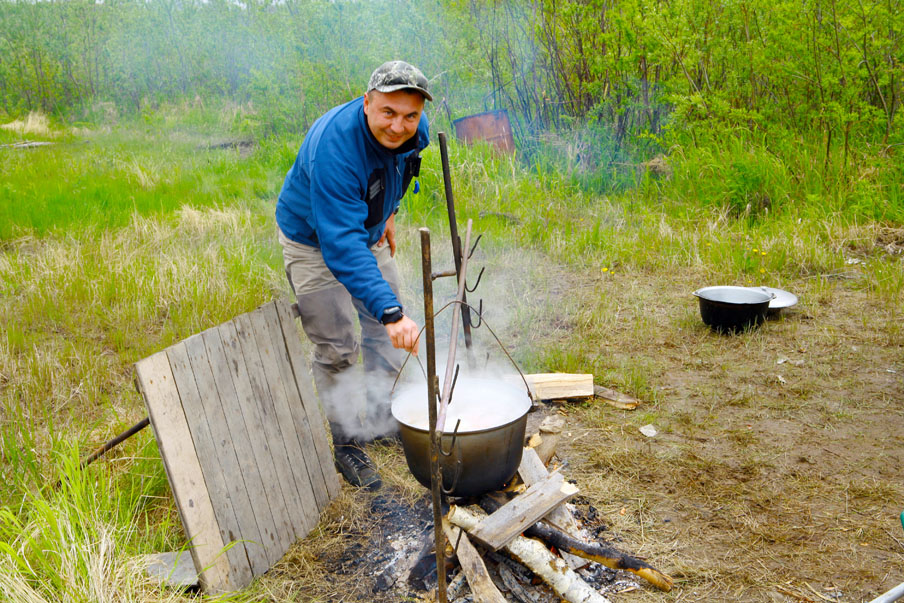
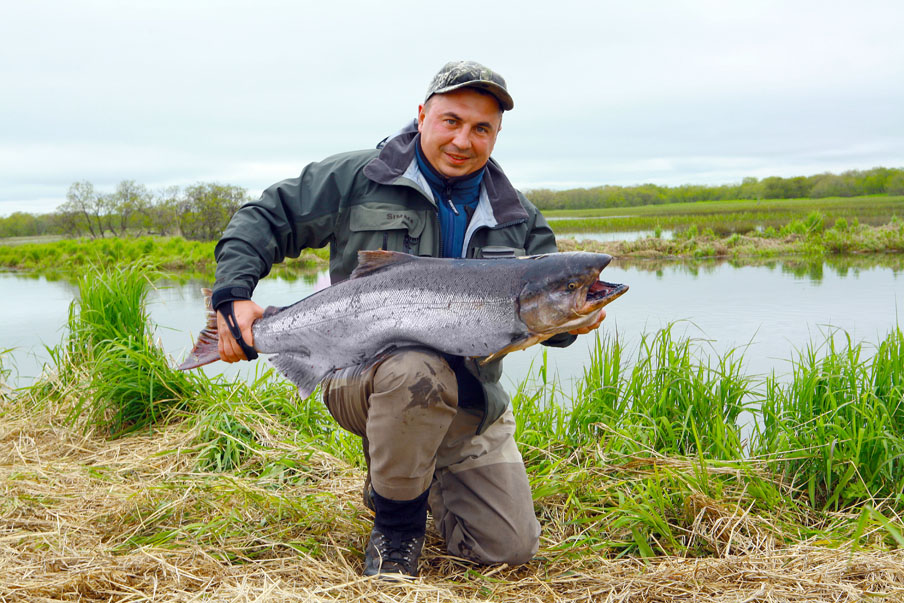
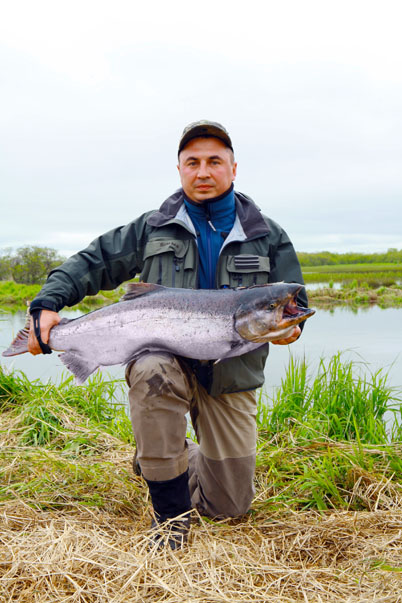
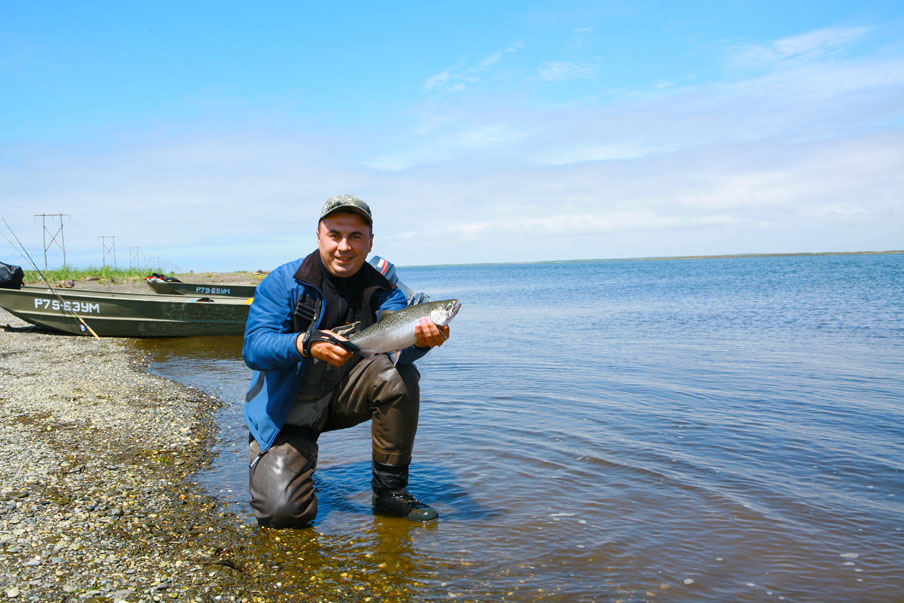
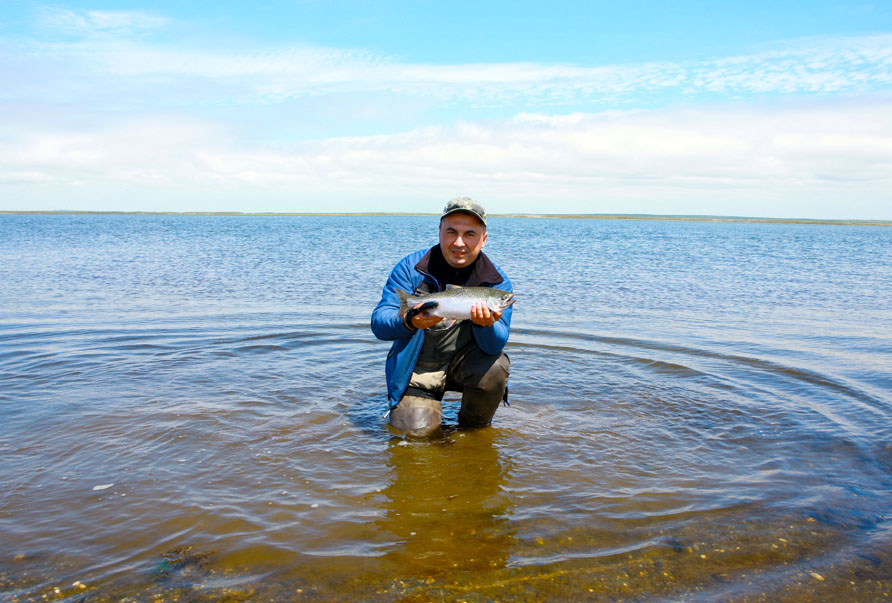
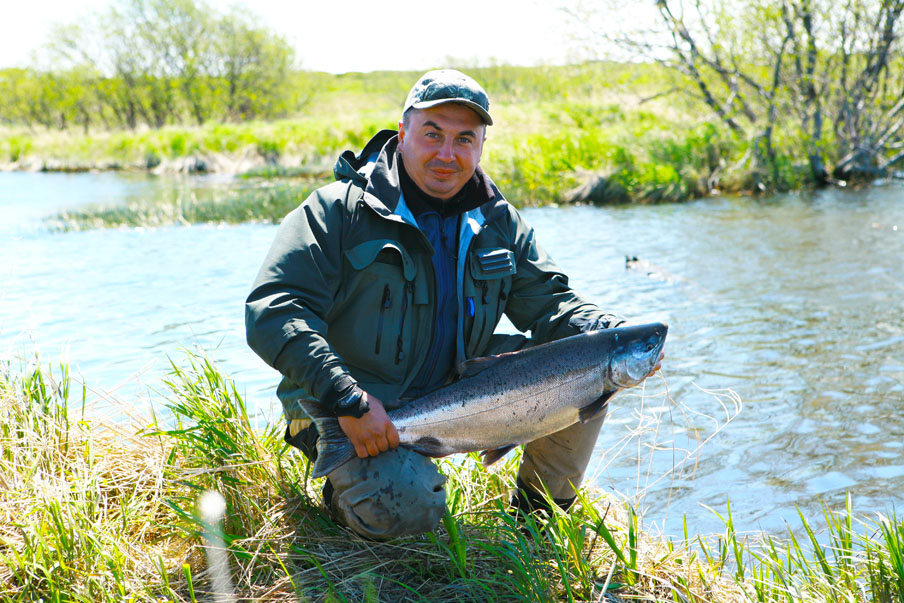
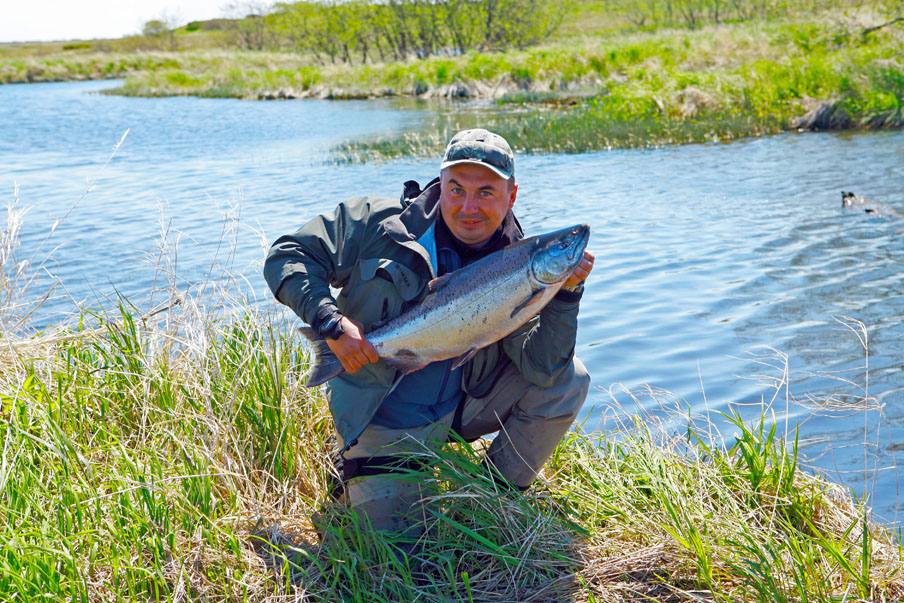
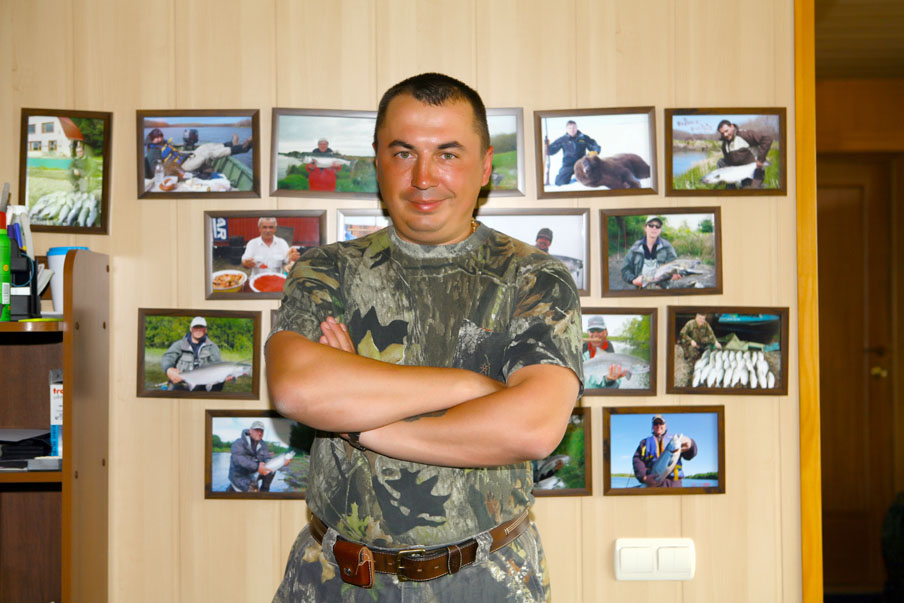
Yuriy Kostyantynovych, being a traveling angler, heads to Kamchatka with the main goal of fly fishing for chinook salmon. This member of the salmon family is often called the King of Fish. It has a streamlined, torpedo-shaped body that resembles a thick log, backward-facing pelvic fins, and small scales. Its body is covered with a scattering of dark spots, and there are several large bands between the head and body.
The coloration of chinook salmon can change during spawning, becoming darker, almost brown. Its average weight, depending on the environment, can range from 6 to 17 kg, with record specimens reaching up to sixty kilograms.
The size of this fish is also impressive. The body length can range from eighty to one hundred and twenty centimeters, and sometimes anglers catch trophies longer than one and a half meters.
Despite being born in freshwater and living there for the first two years of its life, the chinook salmon spends most of its life far from the shore in the open ocean. When it reaches three to five years of age, it begins a long journey back to its native waters to spawn and produce offspring.
Chinook salmon is a predatory fish that is accustomed to feeding on live prey. Its diet can vary depending on its environment. In rivers, it feeds on larvae, insects (both aquatic and those that have fallen into the water), small fish, and various crustaceans. In the ocean, it switches to more nutritious food—plankton, shrimp, fry, cephalopods, and crustaceans.
Yuriy notes that chinook salmon is a worthy opponent with no intention of giving up. The process of reeling it in is quite spectacular and emotional, with fountains of spray, powerful jerks in different directions, and a strong will not to surrender. Yuriy remembers his trip to Kamchatka for chinook salmon as a journey like no other!