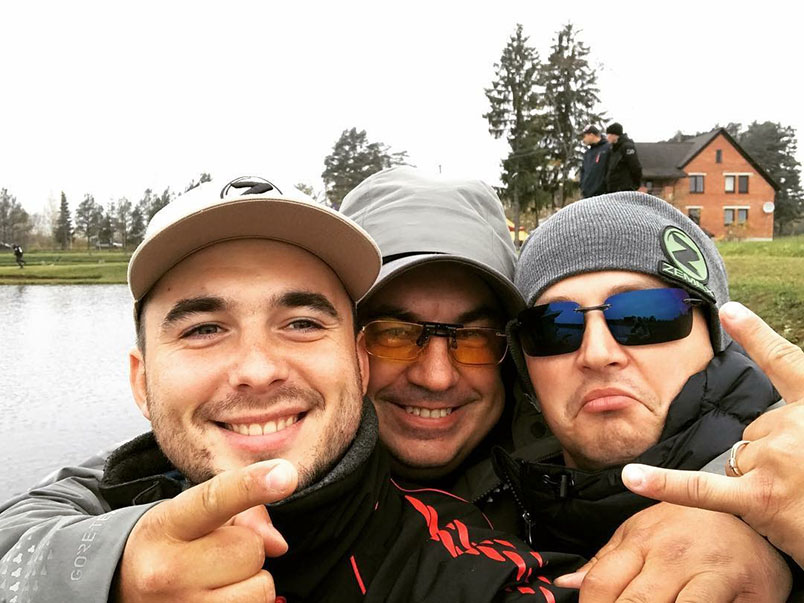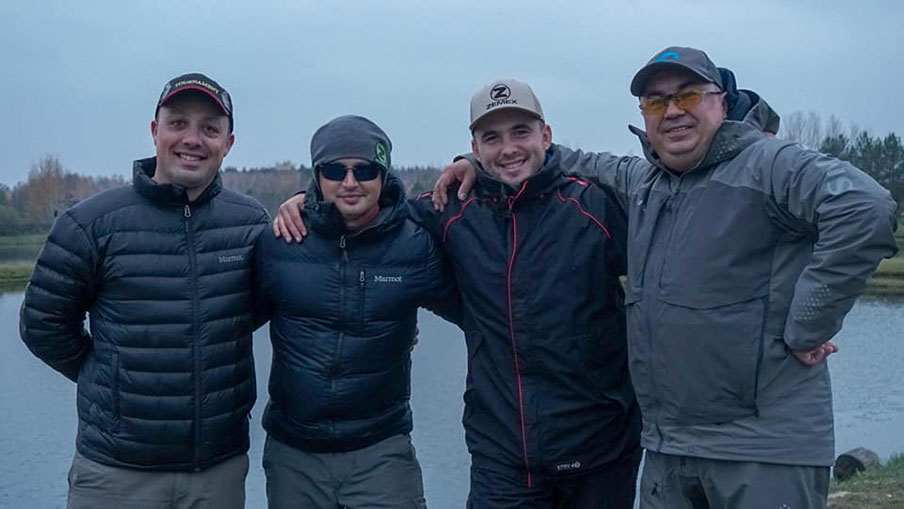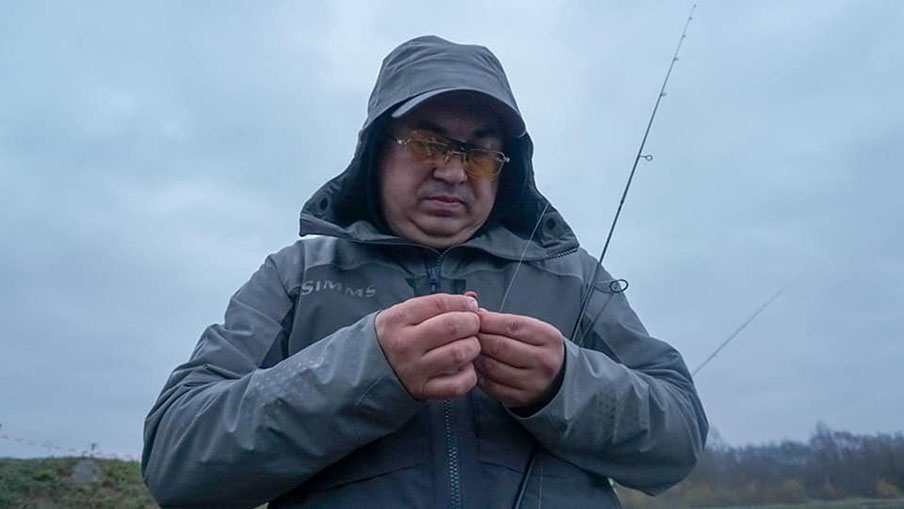

Yuriy Dyachenko’s latest fishing journey took him to Latvia, to the renowned Lake Valdemara. The goal of this trip was to catch rainbow trout using delicate spinning tackle. Latvian waters are home to many different species of fish, none of which are poisonous or dangerous to health. The most popular species include pike, zander, trout, carp, tench, perch, ide, roach, and bream. Flounder and smelt are also common, but the greatest pride for an angler is catching salmon or taimen. Some of the fish on this list spend most of their lives in the sea, entering rivers only to spawn, while others live and spawn in Latvia’s rivers and lakes.
Latvia, officially known as the Republic of Latvia, is a country in Northern Europe. The area of the country is 65 thousand square kilometers. The distance from north to south is 250 km, and from east to west, 450 km. Latvia borders Estonia to the north, Russia to the east, Belarus to the southeast, and Lithuania to the south. The climate is characterized by its range from maritime to continental, moderated by the proximity to the Baltic Sea. The prevailing southwesterly winds bring a significant amount of rainfall from the Atlantic. The sky is often overcast, with only 30-40 sunny days per year. The sunniest and driest month is May. Summers are usually cool and rainy, with temperatures above freezing for 125-155 days per year. The average temperature in July is +15 to +17°C. Winter lasts from mid-December to mid-March.
The main purpose of Yuriy’s trip was to fish for trout in the lake. Trout is a finicky fish, very sensitive to changes in air pressure. For this reason, it’s not advisable to go fishing on the first day of a thaw. It’s better to wait two days for the pressure to stabilize. Sudden changes negatively affect the fish, causing them to move less; sometimes, they even position themselves headfirst into the current, barely moving their fins, and won’t react to a lure right in front of them. No matter what lure you use with passive action and the finest presentation, the result will be the same: the trout simply won’t react. Keep this behavior in mind to avoid disappointment in your fishing experience.
Paid trout fishing ponds have one common feature—they are easy to read (except for wild ponds where fish are stocked). A trout pond is an artificial body of water with a bowl shape, a smooth transition to depth, and a flat plateau in the middle of the pond. In such waters, the main points where fish concentrate are the corners and places where the water is oxygenated—near aerators. Even if the fish population is high (and you would expect bites everywhere), the corners and aerators attract rainbow trout like a magnet.
Fishing for trout without micro-spoons is simply impossible. During this type of fishing, Yuriy follows a specific rule: using a particular weight depending on the trout’s position in the water column. If the fish are in the upper layers, 1.8-2 g spoons are used; if the trout are in the middle layers, 2.7 g spoons are preferred. When the fish are hugging the bottom, 3-4 g spoons are used. These sink quickly to the needed depth, which is very convenient because you don’t have to wait long for the lure to drop. The color palette is wide and varied because the behavior and mood of the trout change quickly.
Although rainbow trout weigh up to 1.5-2 kg, the fishing is done with ultralight tackle, small reels, and the thinnest lines, which makes the process of reeling in the fish just as adrenaline-pumping as catching a large trophy on heavy but coarse gear. Trout put up a wild fight during reeling: with jerks and runs in different directions, they leap out of the water, and when the fish is brought close to the landing net, the angler is often greeted by a fountain of splashes!